What Is Kava Dermopathy? Causes, Symptoms, and How Long It Takes to Clear
What Is Kava Dermopathy? Causes, Symptoms, and How Long It Takes to Clear
By Chester Takau · July 2026
TL;DR
- Kava dermopathy is dry, scaly, sometimes yellow-tinged skin caused by heavy, prolonged kava use
- Also called "kanikani" in the Pacific, or "crocodile skin" — it is not an allergy
- Seen in roughly 45% of regular drinkers and up to 78% of heavy daily drinkers, per DermNet NZ
- It clears within 2–4 weeks of cutting back or stopping, with no lasting damage
- It is not evidence of liver injury, though the DEA lists it among effects of chronic heavy use
Kava dermopathy is a skin condition — dry, flaky, scaly patches, sometimes with a faint yellow tint — that shows up after months or years of heavy, near-daily kava drinking. It is not an allergic reaction and it is not a sign that your liver is failing. It is a cosmetic side effect of long-term high-volume intake, and it goes away once you cut back. That is the short version. Here is what actually causes it, who is at risk, and how long recovery really takes.
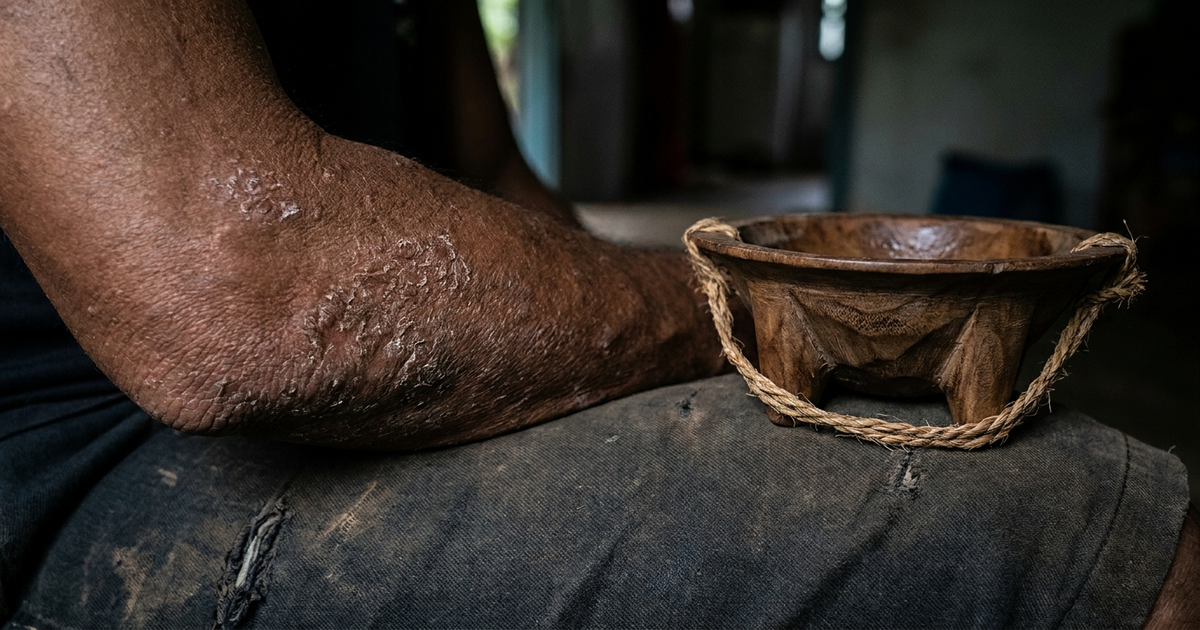
What does kava dermopathy look like?
The skin becomes dry, rough, and scaly — dermatologists describe it as "ichthyosiform," meaning it resembles fish scales. DermNet NZ notes it typically starts on the face, back, and forearms before spreading to the trunk and legs in heavier cases. Some drinkers also notice a subtle yellowish cast to the skin, distinct from the reddish or eosin discoloration seen in other conditions. In Fiji and Vanuatu, the visible flaking has earned informal nicknames — "kanikani" and "crocodile skin" — because of how the scales can look in advanced cases.
What causes it — is it niacin deficiency or something else?
For decades, the leading theory was that kava interfered with niacin (vitamin B3) metabolism. That theory took a hit from a placebo-controlled trial published via The Lancet: researchers gave nicotinamide supplements to heavy kava drinkers with dermopathy and found no meaningful improvement over placebo (5 of 15 improved on nicotinamide versus 5 of 14 on placebo). That result pushed dermatologists toward a different explanation.
A study in the International Journal of Dermatology, "Kava dermopathy in Fiji: an acquired ichthyosis?", reframed the condition as an acquired form of ichthyosis rather than a vitamin deficiency. The current leading hypothesis, summarized by the International Kava Organization's science review, is that kavalactones interfere with cholesterol and lipid metabolism in skin cells, reducing ceramide production in keratinocytes — the outer skin cells responsible for keeping moisture in. Less ceramide means drier, flakier skin. This lines up with why kavalactones, which are fat-soluble compounds, would build up in fatty tissue like skin with sustained heavy use.
How much kava does it take to get dermopathy?
This is the question casual drinkers ask most, and the honest answer is that thresholds are not precisely mapped for Western drinking patterns. What is well established: dermopathy is a heavy-and-prolonged-use condition, not something that shows up after a few kava bar visits. DermNet NZ's figures — dermopathy in about 45% of "regular" consumers and up to 78% of heavy daily consumers — come from populations drinking large quantities most nights of the week, often for years. Long-time posters on Kava Forums who have dealt with it firsthand describe it taking years of near-daily heavy drinking (five or more nights a week for a decade or longer) before flaking appeared, and reversing it usually just meant cutting intake by roughly half plus using ordinary moisturizer. A US kava bar patron drinking a few shells a week is in a completely different risk category than someone drinking multiple bowls nightly for years.
Is kava dermopathy dangerous?
No. It is cosmetic, not internal toxicity. Kava Finders' consumer guide is explicit on this point: dermopathy is "not an allergy" and "not a sign of internal toxicity." That said, the DEA and outlets covering the unregulated kava product boom — including OSF HealthCare's September 2025 reporting — list dermopathy alongside tremors and other effects as a marker of chronic, heavy use, which is worth taking as a signal to scale back rather than a medical emergency. It is a separate issue from the liver-injury concerns the FDA and NCCIH have flagged historically; NCCIH's current position is that the FDA has never formally reviewed kava for safety, which is a regulatory gap, not proof that dermopathy itself is liver-related. For the fuller safety picture, see is kava safe.
How long does it take to clear up?
Sources converge on 2 to 4 weeks after reducing or stopping kava intake, with no lasting scarring or damage. Recovery generally follows the same pattern as onset in reverse — the driest, most affected areas (often the face and forearms) improve first, with fuller clearing over the following weeks as skin cell turnover replaces the affected layers. If flaking has not visibly improved after a month of significantly reduced intake, it is worth ruling out an unrelated skin condition (eczema or psoriasis) with a dermatologist rather than assuming it is still kava-related.
What actually helps while you cut back
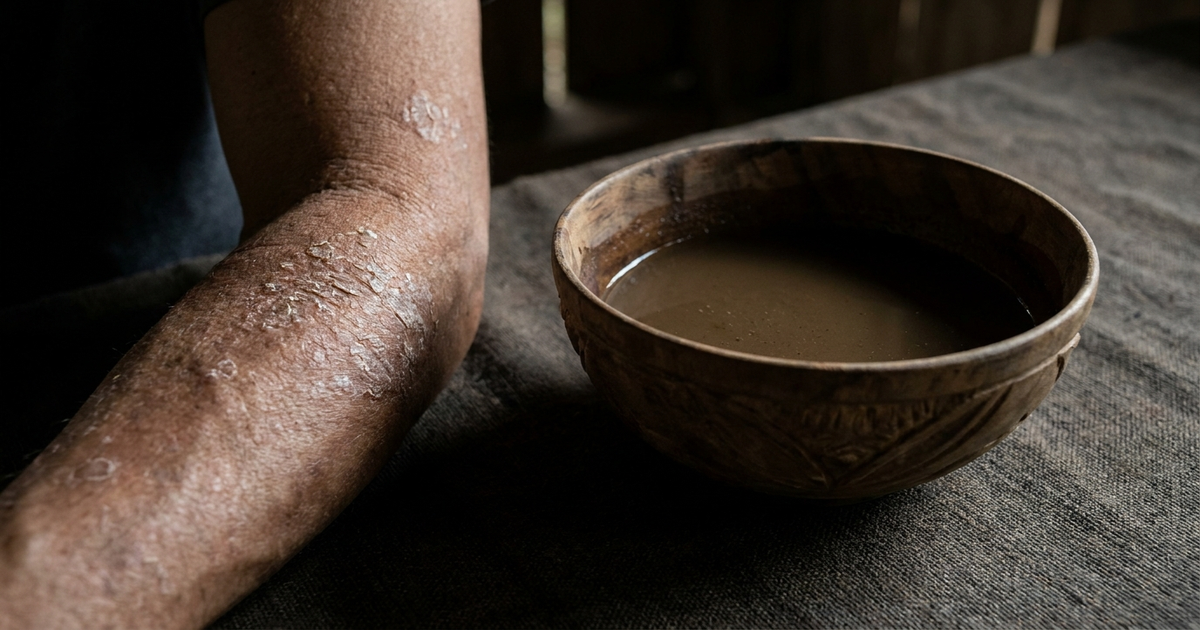
Cutting kava intake is the only intervention shown to resolve dermopathy — the niacin trial ruled out supplementation as a fix. Alongside reducing intake, an ordinary moisturizer is what experienced drinkers report using during recovery. Given the ceramide-depletion hypothesis, a ceramide-based moisturizer is a reasonable choice while skin barrier function recovers, though no clinical trial has tested moisturizer formulations specifically against kava dermopathy.
For a broader look at how dermopathy fits alongside kava's other known effects — and where the real risks versus overstated ones lie — this explainer, "Kava: A Natural Remedy or Risky Drink?", covers both sides in one sitting. It is a useful watch if dermopathy is the first kava safety concern you have come across and you want the wider context before deciding how much to cut back, if at all. For related reading on this site, see kava effects and how long kava lasts.
Transparency note: This article was researched and written by Chester Takau with AI assistance for research gathering and drafting. All recommendations reflect the author's own editorial judgment.
Medical disclaimer: This article is general information reflecting traditional use and published research — not medical advice. Supplement effects, doses, and interactions vary from person to person. Talk to a doctor or pharmacist before starting any supplement, especially if you are pregnant or breastfeeding, taking medication, or managing a health condition.


Comments