Kava vs CBD vs Ashwagandha Comparison: Which One Actually Calms You Down?
Kava vs CBD vs Ashwagandha Comparison: Which One Actually Calms You Down?
By Chester Takau · July 2026
Short answer: they're not competing for the same job. Kava works fast — muscle relaxation and social ease within 30 minutes, gone in a few hours. Ashwagandha works slow, lowering baseline stress reactivity over two to eight weeks of daily use. CBD sits in between, with an effect that's real for some people and unnoticeable for others, largely because of how inconsistent store-bought doses are. None of the three do the same thing, so "which is better" is the wrong question. Which one fits your timeline and your risk tolerance is the right one — and that's what the rest of this breaks down.
The Short Version
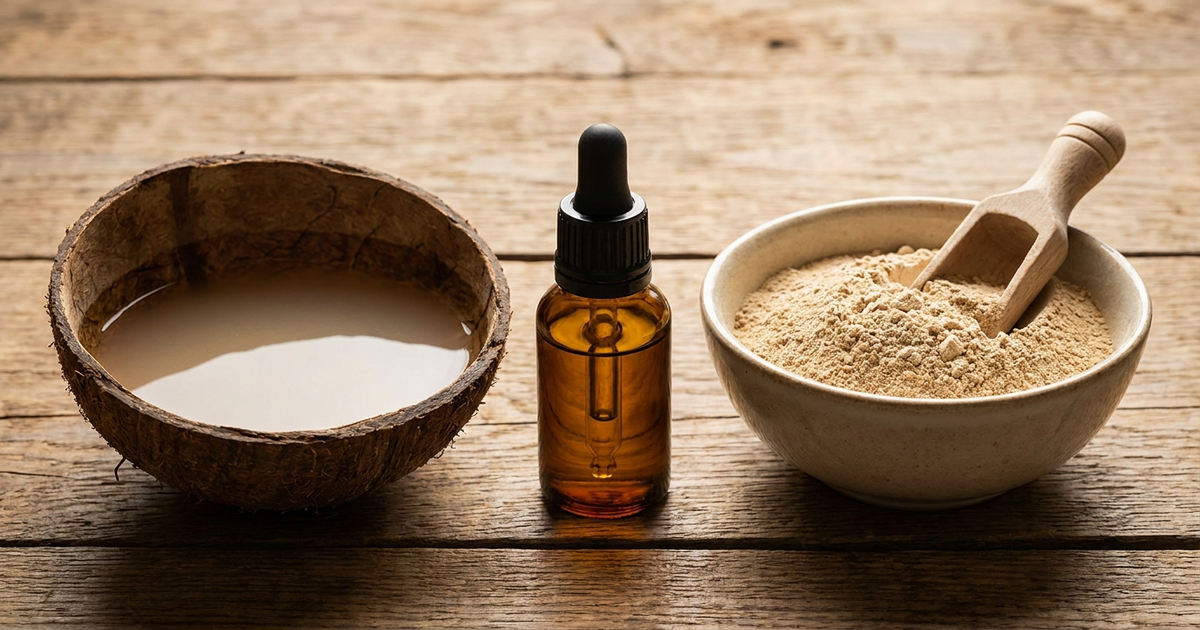
Kava is the fast-acting one — best for situational anxiety, social settings, or replacing an evening drink. Ashwagandha is the slow-building one — best as a daily baseline for chronic stress, if your liver tolerates it. CBD is the inconsistent one — sometimes helpful, often placebo-strength at consumer doses, and legally murkier than the other two. I've been drinking kava for decades. What follows on CBD and ashwagandha is drawn from the clinical and regulatory record, not personal use.
Quick Comparison Table
| Factor | Kava | CBD | Ashwagandha |
|---|---|---|---|
| Onset | ~30 minutes | 30–90 min, inconsistent | 2–8 weeks of daily use |
| Duration | 3–4 hours | 4–6 hours | Cumulative, not per-dose |
| Best for | Situational anxiety, evenings, socializing | Mild, subtle daytime ease | Chronic stress baseline |
| Mechanism | GABA modulation via kavalactones | Endocannabinoid system, indirect | Cortisol regulation, adaptogenic |
| 2025 liver-safety signal | Traced to non-noble tudei cultivars, not noble root | No liver-injury pattern documented | NIH LiverTox Grade B; 12 Dutch cases logged by mid-2025 |
| Gets you "high" | No — relaxed, not impaired | No, if THC-free and lab-verified | No |
| US legal status (2025) | Legal in all 50 states | Federally murky post-Public Law 119-37; not an FDA-recognized supplement | Legal, unregulated as a supplement |
Which actually works faster for anxiety?
Kava, by a wide margin — kavalactones act on GABA-A receptors and calcium channels almost immediately, which is why a shell of kava changes how you feel within half an hour. A 2023 neuroimaging trial in Nutrients measured this directly: 37 adults with generalized anxiety disorder given 120mg of kavalactones twice daily for eight weeks showed a significant drop in dorsal anterior cingulate cortex GABA versus placebo — a measurable brain-chemistry shift, not just a mood survey. Follow-up kava trials for anxiety and PTSD contexts started in mid-2025. CBD's onset is murkier — some feel calm within an hour, others feel nothing at any dose, which tracks with the FTC's ongoing crackdown on unsupported CBD anxiety claims. Ashwagandha doesn't do "onset" the way the other two do. It's something you take daily and notice the absence of, weeks later, when a stressful week doesn't flatten you the way it used to.
Can you stack all three, or do they cancel out?
They don't cancel out — different mechanisms mean they're not fighting for the same receptors — but stacking should be deliberate, not reflexive. The layout that keeps showing up in wellness content, and that matches how each compound behaves, is layered rather than combined: ashwagandha as a daily baseline every morning regardless of mood, CBD as an optional midday layer only if it does something for you personally, and kava reserved for evenings or specific situational stress — a hard conversation, a social event, replacing a drink you'd otherwise have. What doesn't work is treating all three as interchangeable "take when stressed" options; ashwagandha needs consistency to do anything, and stacking it with kava daily just to feel something faster misses why each one exists. If you already drink kava every day, the same discipline about dose and timing I've written about for daily kava use applies when you add a second supplement into the mix.
The liver-safety comparison nobody puts side by side
This is the gap in most kava-vs-CBD-vs-ashwagandha content, and it matters more than onset speed if you're taking any of these daily. Ashwagandha's safety picture got more cautious in 2025, not less. NIH's LiverTox database classifies it as a likely — Grade B — cause of clinically apparent liver injury, based on case reports climbing since 2020, mostly at high doses. The Netherlands Pharmacovigilance Centre logged 12 liver-injury cases by June 2025, onset ranging six weeks to nearly two years after starting; most recovered once they stopped. The UK's FSA and Australia's TGA both issued 2025 notices on rare liver, thyroid, and hypoglycemia risks. In fairness, a 2025 QSAR toxicity analysis in Frontiers in Nutrition found ashwagandha root specifically has a better safety profile than non-root plant parts and most other herbal supplements — the risk looks concentrated in high-dose, prolonged, or non-root products.
Kava's liver reputation is older and more contested. The early-2000s scare that got it temporarily banned in parts of Europe traced almost entirely to non-noble tudei kava and aerial plant parts — stems and leaves, not root — plus solvent-extraction methods that don't reflect traditional preparation. Water-extracted noble root has a WHO-reviewed safety record spanning thousands of years. What's newer: US poison control calls involving kava jumped 383% between 2011 and 2025 (57 to 203), with eight kava-related deaths logged since 2000 and 30% of 2025 calls involving kava mixed with kratom. Modern commercial kava is also reportedly 2–10 times more potent than traditional shells. Read is kava safe before assuming either plant is automatically the gentler choice — both have a safe version and a risky version, and the label rarely tells you which one you're buying.
Will any of these get you high or show on a drug test?
No, with one caveat on CBD. Kava works through GABA and calcium channels, not the cannabinoid or opioid pathways drug panels are built to catch — it won't trigger a THC, opiate, or amphetamine screen. Ashwagandha isn't a controlled substance and carries no drug-test risk either. CBD is the exception worth knowing: full-spectrum products can contain trace THC, and enough of it accumulated over time has occasionally pushed people over a drug-test threshold. If that's a concern, stick to broad-spectrum or isolate CBD with a certificate of analysis, not a bottle that just says "hemp extract" on the label.
Does CBD actually do anything at consumer doses?
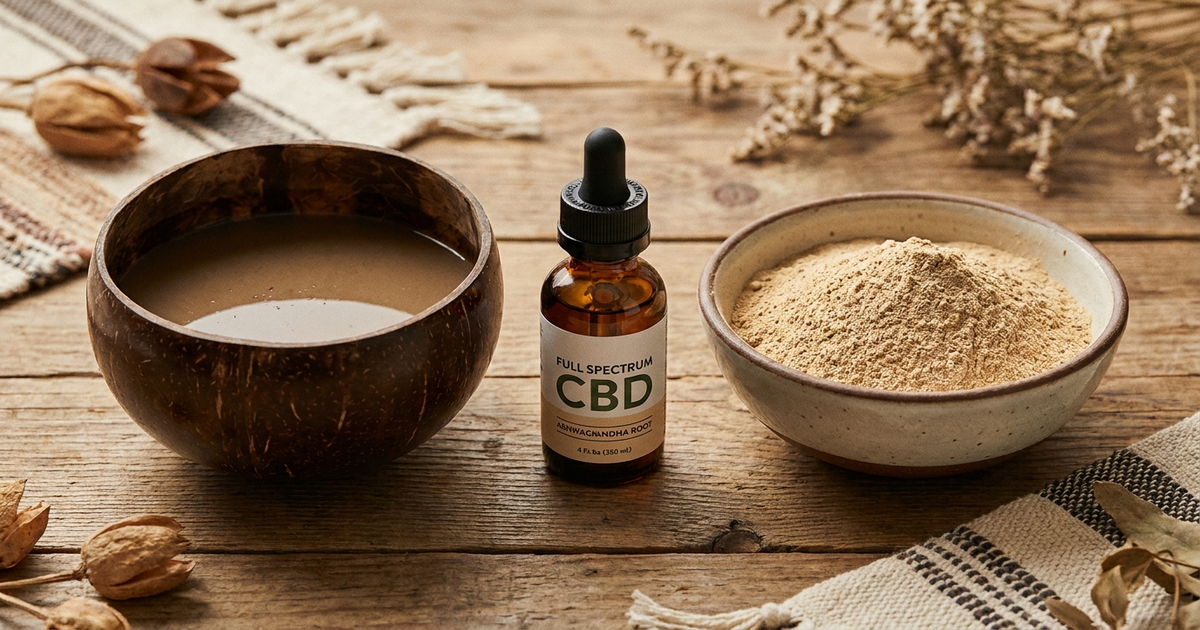
This is the most common complaint in CBD discussions, and it's a fair one. The FDA still doesn't recognize CBD as a legal dietary supplement under the FD&C Act — even after Public Law 119-37 rewrote the federal hemp definition in late 2025 and a December 2025 executive order moved toward federal marijuana deregulation, neither change resolved that specific FDA position. Because CBD sits in that regulatory gray zone, dosing and purity vary wildly between brands, and a lot of what's sold simply doesn't contain enough active cannabidiol to do what the label implies. That inconsistency — not the compound itself — is why so many people conclude CBD "doesn't work." Kava and ashwagandha, by contrast, have centuries and decades respectively of dosing data behind them.
Nobody has published a real three-way kava-vs-CBD-vs-ashwagandha video — every comparison online swaps in kratom for one of the three, usually ashwagandha. The closest thing that exists covers kava and CBD directly, even though it pairs kava with kratom rather than ashwagandha for the third slot:
The bottom line
If you want to replace an evening drink or take the edge off a specific stressful moment, kava is the one built for that — fast, well-understood, no next-day dependency, as long as you're buying noble root and not cutting corners on quality. If you're managing chronic, background stress and you're willing to wait weeks to feel the difference, ashwagandha root is the better daily tool, though the 2025 liver-safety data means it deserves the same respect for dose and duration that any daily supplement does. CBD is the one I'd spend the least on until the regulatory picture and product quality catch up — for most people at consumer doses, it's the least reliable of the three. None of them replace a conversation with a doctor if you're on SSRIs or have existing liver concerns; the interaction data for all three combined with prescription medication is still thin.
Transparency note: This article was researched and written by Chester Takau with AI assistance for research gathering and drafting. All recommendations reflect the author's own editorial judgment.
Medical disclaimer: This article is general information reflecting traditional use and published research — not medical advice. Supplement effects, doses, and interactions vary from person to person. Talk to a doctor or pharmacist before starting any supplement, especially if you are pregnant or breastfeeding, taking medication, or managing a health condition.


Comments