Kava Ceremony Etiquette Explained: Fiji, Samoa, Tonga and Vanuatu
Kava Ceremony Etiquette Explained: Fiji, Samoa, Tonga and Vanuatu
By Chester Takau · November 2026
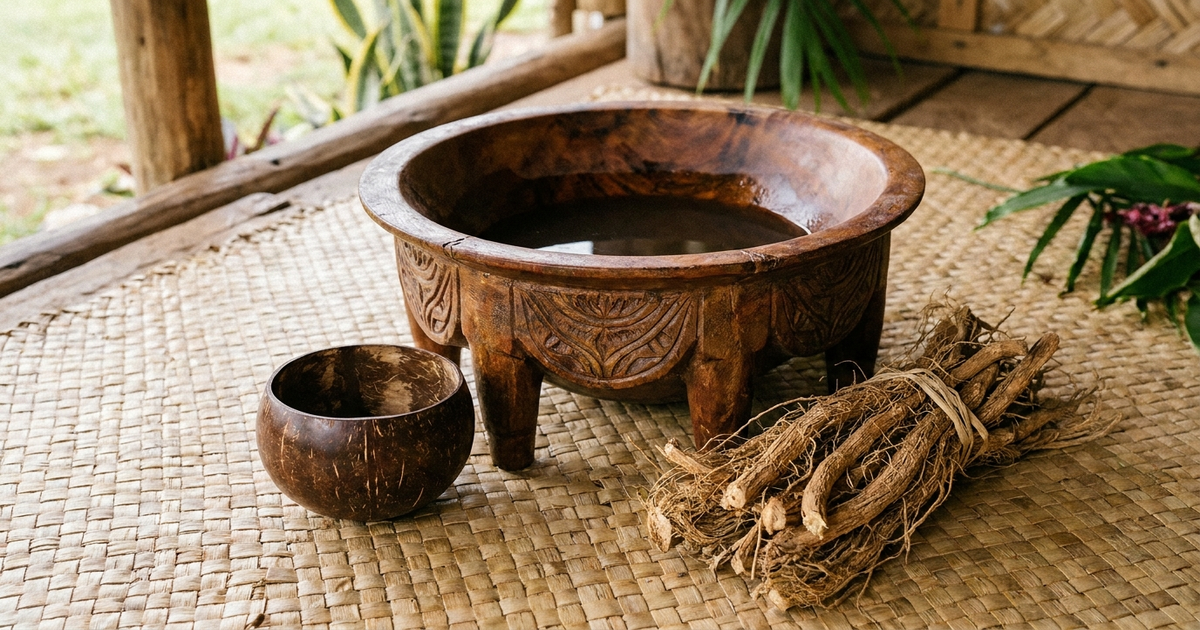
Kava ceremony etiquette explained in one line: arrive with a gift if you are a guest, sit lower than the chief or host, take off hats and sunglasses, accept the cup with both respect and a clear response, and ask before you photograph anything. The details change by island group. Fiji centres on the sevusevu gift and clapping, Samoa on the 'ava toast and right-hand-only rules, Tonga on rank and formal roles, and Vanuatu on quiet presence at the nakamal. The table below puts them side by side. Where guides disagree, such as whether you may refuse a cup, I say so instead of picking a winner.
Chester Takau grew up drinking kava in Vanuatu and writes from firsthand Pacific-Island experience. Health information is educational, not medical advice.
How do the ceremonies compare?
Most etiquette pages cover Fiji only. This table lines up the four cultures on the points visitors ask about most. It is built from the sources listed at the end, and the practice varies by village, family and occasion.
| Point | Fiji | Samoa | Tonga | Vanuatu |
|---|---|---|---|---|
| Name | Yaqona; the visitor's welcome is sevusevu | 'Ava | Informal faikava; formal Taumafa Kava | Kava, drunk at the nakamal |
| Guest's gift | Yaqona root presented to the chief; described as a non-optional gesture of humility | Not covered in my sources; ask your host | Not covered in my sources; ask your host | Not covered in my sources; ask your host |
| Cup | Bilo (coconut shell); you respond with a clap, and "bula" before drinking | Shell cup; a few drops are poured on the ground first; "manuia" as the toast; right hand only | Opens with fakatapu protocol; kava made in a kumete bowl by the tou'a | Quiet presence; conversation is low-key |
| Roles and rank | Chief receives the gift first; you sit below the chief | Includes the taupou (ceremonial village maiden) in formal settings | Strict: the kai fono food is claimed by rank | Less formal protocol in my sources |
| Refusing | Explain medical reasons before it starts, per some guides | One etiquette source calls refusal a serious breach; others allow touching the cup to your lips | Not covered in my sources | Not covered in my sources |
Cells marked "not covered" are gaps in what I could verify, not claims that no custom exists. The comparison layout is my own framing of the sources.
What do I do in a Fijian ceremony?
Tourism Fiji's traveller guide is the official starting point, and the Namale Fiji and Planet D guides repeat the same core steps. The usual sequence, as those guides describe it:
- Dress modestly and remove hats and sunglasses. The reason given is respect for the chief.
- Sit when invited, and sit below the chief. Don't point your feet at anyone.
- The host receives the sevusevu. On organised village tours the operator normally buys and presents it for you.
- When the cup is offered, clap once, say "bula", take the cup and drink. Guides commonly describe clapping three times afterwards and saying "maca" (meaning the cup is empty). Follow the people around you if they do it differently.
- You'll hear "high tide" and "low tide" when offered a cup. High tide is a full cup and low tide a smaller one, so you can ask for less.
Do you have to drink it in one go? Check the Tourism Fiji guide and your host. Asking for "low tide" keeps the cup small. Many villages also don't take unannounced visitors, so access usually goes through a homestay or operator.
What should I bring as sevusevu, and what does it cost?
Travel And Tour World reported on 6 September 2026 that Tourism Fiji's guidance puts a sevusevu gift of about 0.5 kg of yaqona root at "generally FJD30 to FJD40". The gift is root, and it is presented with a few words about why you've come. A sailor presenting kava to the chief for permission to anchor and enter a village shows the same protocol in the Sevusevu Ceremony on Waya Island video from the Solo sailing around the world channel. I haven't checked its upload date.
National Geographic's segment follows a visitor taking part in a formal ceremony. It is a documentary piece, not a step-by-step guide, and I couldn't confirm its upload date or read its transcript.
How do Samoan and Tongan ceremonies differ?
Samoan 'ava has its own toast, "manuia", and the custom of pouring a few drops on the ground before drinking. Sources stress using the right hand only. The taupou, a ceremonial village maiden, features in formal ceremonies.
Tonga separates the informal faikava from the royal Taumafa Kava, which the Wikipedia entry on Taumafa Kava covers. A recent example of the formal roles is "Honoring the Principles of Tonga", held 28 March 2026 and reported by BYU on 19 May 2026. More than 500 people attended a ceremony using a century-old kumete given by King Tupou II. It shows the tou'a (the kava mixer), the fakatapu opening protocol and the kai fono food claimed by rank (BYU).
What about Vanuatu's nakamal?
Vanuatu's practice is quieter than the Fijian or Tongan formal ceremony. The nakamal is a gathering place where people drink in near silence, and the courtesy for a visitor is to be calm and let the evening set its own pace. Nothing here replaces asking your host what the local rules are, since they vary by island and community.
Can I refuse a cup?
Guides disagree. One Samoan etiquette source calls refusal a serious breach. Far and Away Adventures says touching the cup to your lips can be acceptable, or that you should explain medical reasons before the ceremony starts. If you're pregnant, on medication, avoiding alcohol-like substances or have liver concerns, tell your host early and quietly instead of declining at the moment the cup is in front of you. General guidance, not medical advice: kava and the liver is a question for a doctor or pharmacist, not a host.
Can I take photos?
Several Fijian guides call photos or video during the ceremony inappropriate. Others say to ask first, and note that being welcomed into the ceremony is not blanket permission to photograph. Ask before you lift a phone, and accept a no.
What changes at a kava bar outside the Pacific?
Most bars serve in shells and few enforce ceremonial order. If the house claps, clap along, but it varies a lot by bar. KavaReview's history and ceremony explainer (updated 26 July 2026) covers the debate over Western bars borrowing Pacific symbols such as "Bula!" signs and tanoa decor without the context behind them. Its summary line is "Gratitude, not costume." The counter-argument it records is that how people drink kava matters more than whether outsiders drink it, and that buying origin-named noble root is a form of respect.
One practical courtesy applies anywhere: serving sizes differ, so see my breakdown of the kava shell vs cup difference before you count rounds, and read whether you can drive after drinking kava before you leave the bar.
Why does Fiji's 2026 Kava Bill matter to etiquette?
The Yaqona (Kava) Bill 2026 was tabled in Parliament on 21 August 2026 and sent to a Standing Committee after its first reading. It is not law yet. Prime Minister Sitiveni Rabuka said on 3 September 2026 that the public will get another chance to comment (Fijivillage). As reported on 27 August, the Bill would make it an offence to falsely present kava as Fijian, with fines of up to FJD 100,000 for companies and up to FJD 10,000 or two years in jail for individuals. It would also set up a licensing system run by a new Fiji Yaqona Council (Fiji Sun). On 18 October the committee finished its Taveuni consultations. Farmers raised years of unpunished kava theft, villagers proposed banning green kava sales, and a priest asked for women and young people to be included on the Council. For a buyer, the practical link to etiquette is small but real: choose vendors that name the origin of their root.
The original angle: one comparison across four cultures
This is a research piece, not a personal test. The information gain is the four-culture table above, plus the places where guides contradict each other (refusal, photography). Most pages I found cover Fiji alone, and none I found tie the 2026 Kava Bill to how buyers can show respect. Tell your host about any medical needs early, follow what the room does, and treat my table as a starting point for the question "what do you do here?"
FAQ
Is it rude to say no to kava?
It depends on the culture and the host. Explain early, and ask whether touching the cup to your lips is acceptable.
Do I clap at a US kava bar?
Only if the house does. Most bars are relaxed about it.
Why no hats or sunglasses?
Fijian guides frame them as disrespectful to the chief. Take them off before you sit.
Sources
Tourism Fiji — A traveller's guide to drinking kava in Fiji
BYU — Kava ceremony turns museum artifact into living experience (19 May 2026)
Fiji Sun — Proposed fine for falsely labelling kava as Fijian (27 August 2026)
Fiji Sun — Taveuni consultations on the Kava Bill (18 October 2026)
Fijivillage — Kava Bill 2026 is not law yet (3 September 2026)
Travel And Tour World — Sevusevu cost guidance (6 September 2026)
KavaReview — Kava history and ceremony
Namale Fiji — Taking part in a traditional kava ceremony
The Planet D — Kava ceremony in Fiji etiquette
Far and Away Adventures — Kava ceremony in Samoa
Etiquipedia — Samoan etiquette
UN — Fijian kava ceremony info leaflet
Wikipedia — Tongan Kava Ceremony (Taumafa Kava)
Updated November 2026.
Transparency note: This article was researched and written by Chester Takau with AI assistance for research gathering and drafting. All recommendations reflect the author's own editorial judgment.


Comments