Can You Bring Kava Root Through Airport Customs? Australia, NZ and US Rules
Can You Bring Kava Root Through Airport Customs? Australia, NZ and US Rules
By Chester Takau · Updated November 2026
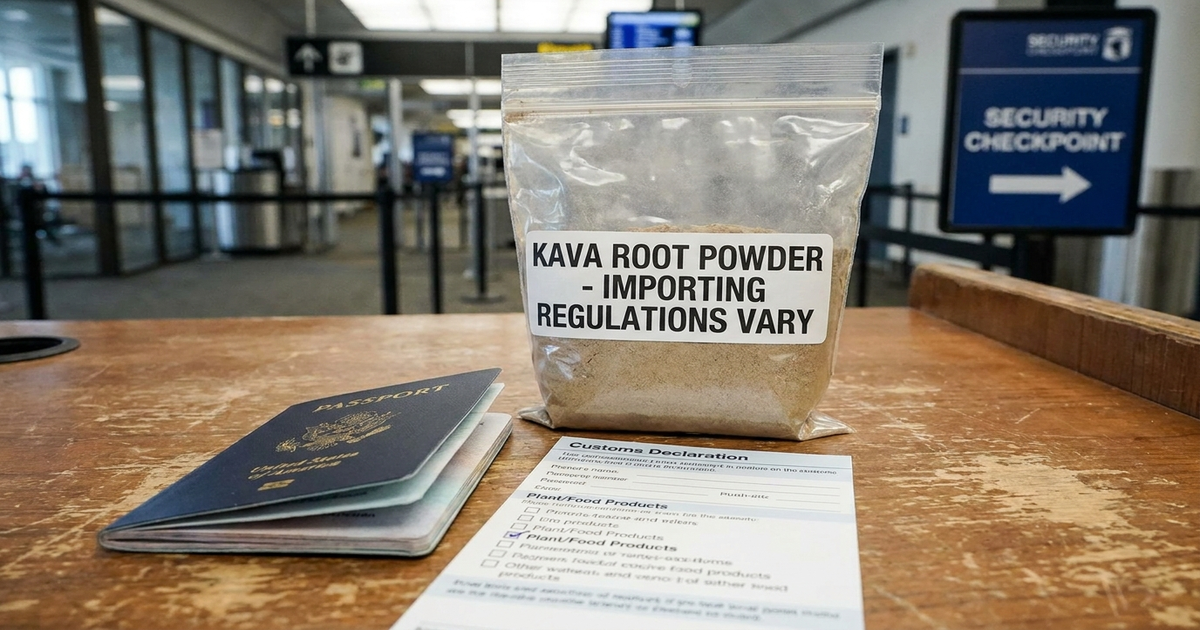
Usually only as powder, and always declared. Australia's Office of Drug Control lets travellers aged 18 or over bring up to 4 kg of kava powder in accompanied baggage without a permit, except in the Northern Territory. The Biosecurity Authority of Fiji says that allowance does not cover roots, stems or chips. So whole or chopped root is the form most likely to be refused. If you are unsure at any border, declare it: New Zealand's rule is "If you are not sure, declare," and failing to declare biosecurity items costs an on-the-spot fine of at least NZ$400.
Why does root get treated differently from powder?
Australia reopened kava to travellers and commercial importers in stages, starting with a pilot in December 2019. The personal allowance that came out of it is written around powder and commercially prepared kava drinks. Many travel pages still quote the older 2 kg figure, and one old Fiji Sun piece describes 2 kg as a carry-on limit. The Office of Drug Control and the Biosecurity Authority of Fiji (BAF) both give 4 kg of powder today. Almost nothing I found says plainly that dried root, stems and chips sit outside it, which is the direct answer to the "root" search.
What are the rules country by country?
| Where | Powder | Root, stems, chips | Declare? |
|---|---|---|---|
| Australia (not NT) | Up to 4 kg, age 18+, no permit | Not covered by the allowance (per BAF) | Yes |
| Northern Territory | Traveller allowance does not apply | Not covered | Yes |
| New Zealand | I found no kava-specific allowance | Same | Yes. "If you are not sure, declare"; fine of at least NZ$400 |
| United States | No clear CBP or USDA guidance found | No clear guidance found | Declare plant material |
| Leaving Fiji | Checked bag only, declared; 15 kg per person per three months | Same; phytosanitary certificate for personal exports | Yes |
Checked against the Office of Drug Control, BAF and NZ MPI pages listed below. Rules change, so confirm with the destination's agency before you pack.
What do you need to know leaving Fiji?
BAF says pounded kava "cannot be carried in your hand luggage or on board via air flight." It goes in checked luggage and must be declared. The limit is 15 kg per person per three months, and personal exports need a phytosanitary certificate. This is the half of the trip that guides about the destination skip.
What about the United States?
I couldn't find clear CBP or USDA APHIS guidance for travellers carrying dried root versus powder, so I won't pretend there is a rule to quote. What exists is the FDA's position, confirmed in December 2025 and updated in March 2026, that kava prepared the traditional way (mixed only with water and drunk) is a conventional food under federal law. That settles what kava is, not what a border officer will accept in your bag.
On US domestic flights, forum users report mostly smooth trips with occasional swabbing. One says TSA swabbed them and their kava, then told them to "enjoy your coffee." The repeated advice is to keep powder in labelled retail packaging, because unidentified powders draw questions. Those are anecdotes from a 2021 thread, not policy.
Should you just call it tea?
Some forum posters say they tell screeners it's tea or protein powder. Don't. It contradicts official advice to declare plant material, and in New Zealand an undeclared biosecurity item brings the fine above. A declared bag of labelled kava is a short conversation; a mislabelled one is a bigger problem.
What has changed in 2026?
- Fiji's import rules (late September 2026): these cover raw roots, chips, pieces and powder, and require permits, traceability documents and chemotype and microbiological testing. They target importers, not travellers, but they show how fast the rules are moving. Vanuatu says it may limit exports to Fiji to powder only.
- Australia, IFN 15-26 (effective 13 October 2026): commercial importers need an Office of Drug Control permit and must label to Food Standards Code Standard 2.6.3. The page timed out when I tried to open it, so I'm relying on search summaries. It does not change the traveller allowance as far as I can tell.
- Australian traveller declarations: the Australia Travel Declaration can now be completed in the Qantas app up to 72 hours before departure. A Biosecurity Amendment bill debated in August 2026 would add a duty on travellers to provide prescribed biosecurity information; I only saw it at second reading, so I can't say it passed.
SBS Dateline's report covers kava lounges and the history of Australia's import ban. It isn't about airport customs and I couldn't check its captions, so I'm not quoting it. I found no video that covers customs directly.
What should you do once you land?
If you're planning to host, it's worth knowing how much powder that actually takes before you pack 4 kg. If you're wondering whether you need a kava set, read that before buying gear to carry home. And after a long flight, check the evidence on driving after drinking kava before you collect a hire car.
What is solid and what is not
- Documented: Australia's 4 kg powder allowance (18+, not NT); BAF's exclusion of root, stems and chips; Fiji's checked-bag, 15 kg and certificate rules; NZ's declare-if-unsure rule.
- Not found: clear US CBP or USDA guidance; a NZ kava-specific allowance; confirmed Western Australia restrictions.
- My limits: this is a research piece, not a record of my own border crossings. UK, EU and Gulf "can I bring it" pages are templated, so I left them out of the table.
General guidance, not legal or medical advice. Check the destination agency's current page before travelling.
Sources
- Australian Office of Drug Control: kava
- Biosecurity Authority of Fiji: kava
- NZ MPI: failing to declare
- Australian Department of Agriculture: IFN 15-26 (Oct 2026; summary only)
- PINA: Vanuatu to consult kava industry over Fiji import regulations (Oct 2026)
- Australian Department of Agriculture: making travel to Australia easier (Jul 2026)
- OpenAustralia: Biosecurity Amendment debate (Aug 2026)
- Fiji Times: US FDA treats kava as a conventional food
- FHTA: Australia allows 4 kg of kava
- Kava Forums: travelling with kava (2021)
Transparency note: This article was researched and written by Chester Takau with AI assistance for research gathering and drafting. All recommendations reflect the author's own editorial judgment.


Comments