Why Germany Banned Kava in 2002: What Was Actually Banned
Why Germany Banned Kava in 2002: What Was Actually Banned
By Chester Takau · November 2026
Germany's drug regulator, BfArM, withdrew the marketing authorisations of kava-extract medicines in June 2002 after reports of severe liver damage, citing more than 40 cases including 6 liver transplants and 3 deaths. The trigger was a February 2000 Swiss report of 8 liver cases linked to a German-made extract. It was a ban on pharmaceutical extracts, mostly made with ethanol or acetone, not on the traditional water-based drink, and personal possession was never illegal. A German court overturned the withdrawal in 2014, but strict conditions kept products off the market.
Chester Takau grew up drinking kava in Vanuatu and writes from firsthand Pacific-Island experience. Health information is educational, not medical advice.
So was kava itself ever banned in Germany?
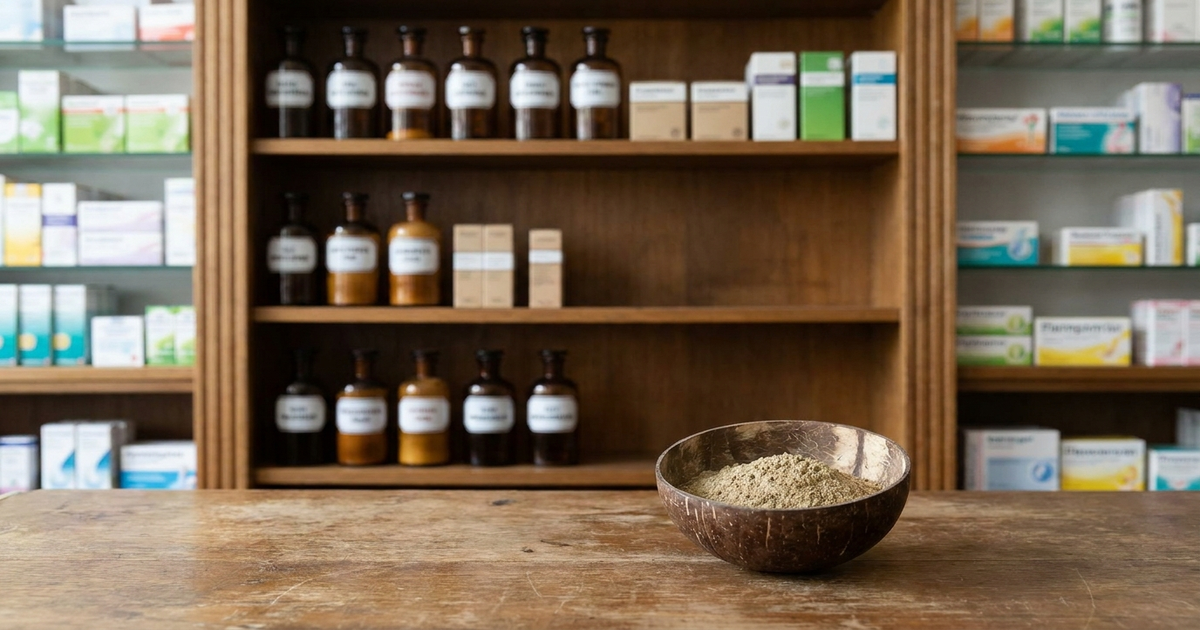
Not in the sense most people mean. A commenter on r/Kava put it bluntly: kava "has never been sold in Germany" as a drink. What German pharmacies sold were medicines containing kava extract, and those are what lost their licences. The table separates three things that readers regularly mix up.
| Thing | What the 2002 action did |
|---|---|
| Kava-extract medicines (ethanol or acetone extracts) | Marketing authorisations withdrawn. This is the actual "ban" |
| The traditional water-based drink | Not the target of the withdrawal. Several sources stress that personal possession was never illegal |
| EU Novel Food rules | A separate regulatory question that I did not find the 2002 action to cover |
The table is my own summary of the sources listed below, not an official classification. I'm a writer, not a lawyer, so check current rules before importing or selling anything.
What actually triggered the withdrawal?
The first signal came from Switzerland in February 2000: 8 liver cases tied to a German-made kava extract. BfArM announced in November 2001 that it intended to act, and in June 2002 it withdrew the licences (one source dates the decision 14 June 2002). Its stated basis was more than 40 cases of severe liver damage, with 6 transplants and 3 deaths (NutraIngredients, 2002).
How many liver cases were there, really?
It depends on who is counting. The regulator said more than 40. An ABC report, relayed by NutraIngredients, described 26 cases with only 3 definitively linked to kava. Pharmazeutische Zeitung reports 32 cases, many of whose links were later judged doubtful (Pharmazeutische Zeitung, 2015, in German). Some Europe-wide tallies run as high as 83. Most patients were also taking other drugs that stress the liver, which makes causation hard to prove. I couldn't find a source that reconciles these numbers, so I'd treat any single figure as one side's count.
Was the ban about politics or science?
Both arguments exist. German kava researcher Mathias Schmidt argues the withdrawal protected BfArM's reputation after its criticised handling of the Lipobay (cerivastatin) affair, and calls it an over-cautious use of the precautionary principle. That is a paraphrase from Fiji media, not a direct quote (Fiji Global News). Vincent Lebot, a scientist working with Vanuatu's government, was more direct: "It was a mistake for Germany to ban the drink in the first place… The reasoning behind the ban was misleading and wrong" (ABC Pacific Beat, September 2024). He says the worries centred on "tudei" kava but hit every cultivar. Growing up in Vanuatu, I heard the same distinction drawn at the nakamal: the cultivar matters, which is why a page like what Melo Melo kava is and where the Ambae cultivar fits is worth a read.
The other side is real too. The EU herbal medicines committee (HMPC) judged oral kava's benefit-risk for anxiety "unfavorable" in 2017, and Poison.org still warns of liver injury. The American Botanical Council's summary is that the risk is "generally very low, but… not zero."
Does the solvent matter?
It may be the part that gets least attention. The German cases involved ethanol and acetone extracts, and WHO and FAO (2016) rated water-based kava an "acceptably low" risk. A July 2026 study in Chemico-Biological Interactions found a similar split in liver-cell tests: high-dose ethanolic extracts "may approach inhibitory thresholds" for the CYP1A2 and CYP3A4 enzymes, while normal water-based doses were unlikely to cause significant interactions. Bill Gurley of the University of Mississippi cautioned against applying cell results to real products (SupplySide Journal). I'm connecting these dots myself. No source I found makes the argument in one place.
What happened after 2002?
| Date | Event |
|---|---|
| Feb 2000 | Swiss report of 8 liver cases tied to German-made extract |
| Nov 2001 | BfArM announces it intends to act |
| Jun 2002 | Marketing authorisations withdrawn |
| Dec 2007 | Full revocation, per Apotheke Adhoc |
| Jun 2014 | Court overturns the ban (RNZ) |
| 2015 | Münster Higher Administrative Court reportedly upholds the ruling; BfArM sets strict conditions |
| 2024 | Disputed. See below |
Sources disagree on details. The 2014 ruling is dated 10 or 11 June, and RNZ calls the court the Federal Administrative Court while others say Cologne. The conditions that followed reportedly included weekly liver-function tests, which critics say kept products off shelves even after the legal win. RNZ says the ban cost Pacific growers hundreds of millions of dollars as other EU countries followed Germany.
Unconfirmed: Cook's Kava claims a Cologne court overturned a "latest withdrawal" on 18 June 2024 and that BfArM appealed. I found no other source for a 2024 ruling, and it may be a mix-up with 2014. ABC reported in September 2024 that a pending German case "could soon end" the ban. Treat the current status as unresolved.
Does today's evidence look like 2002's?
Partly. A CDC MMWR report from April 2026 counted 3,101 kava exposure reports to US poison centers from 2000 to 2025, rising to 203 in 2025, with 8 deaths over the whole period. The authors identified no cases of acute liver failure. Moderate liver-enzyme rises occurred in 1.7% of kava-only exposures versus 6.3% of kava plus kratom, and kratom was involved in 30% (61) of 2025 reports (CDC MMWR). That points the current risk signal at co-use, not kava alone. Poison-center reports aren't a controlled study, so this doesn't settle 2002 either way. For the practical side of staying safe, see my piece on whether you can drive after drinking kava. General guidance, not medical advice: if you take medication or have liver problems, ask a doctor or pharmacist before using kava.
A short from Dr. Brian Yeung, ND, giving a balanced take on kava and the liver. It doesn't mention Germany, and I couldn't check its captions, so I'm including it as background on the liver question only.
The original angle: one place for the numbers and the scope
This is a research piece, not a personal test. The added value is a single view of three things the top results scatter: which products the 2002 action covered, why the case counts (26, 32, 40+, 83) differ, and a timeline from 2000 to the disputed 2024 claim, with confirmed facts kept apart from claimed ones.
FAQ
Is kava legal in Germany now?
The 2002 withdrawal was overturned in court in 2014, but strict conditions followed and the current position is disputed. Check with BfArM or a specialist before buying or selling.
Did other countries copy the ban?
RNZ says other EU countries followed Germany, at a cost to Pacific growers of hundreds of millions of dollars. I didn't verify the country-by-country list.
Sources
NutraIngredients — Germany bans kava kava after liver damage fears (June 2002)
NutraIngredients — Lift of German kava ban (July 2014)
RNZ — German court overturns kava ban (June 2014)
Pharmazeutische Zeitung — Comeback unter strengen Auflagen (2015, German)
ABC Pacific Beat — Vincent Lebot on the German ban (September 2024)
Fiji Global News — Kava controversy: politics over science in Germany's ban
SupplySide Journal — Kava study highlights botanical's complex profile (July 2026)
CDC MMWR — Kava poison-center reports (April 2026)
Cook's Kava — Is kava legal in Europe? (2024 claim unconfirmed)
Poison.org — Kava
Updated November 2026.
Transparency note: This article was researched and written by Chester Takau with AI assistance for research gathering and drafting. All recommendations reflect the author's own editorial judgment.


Comments